Explore the system flow
A conceptual diagram based on the project documentation. Open each stage to read its context.
CCTV and location
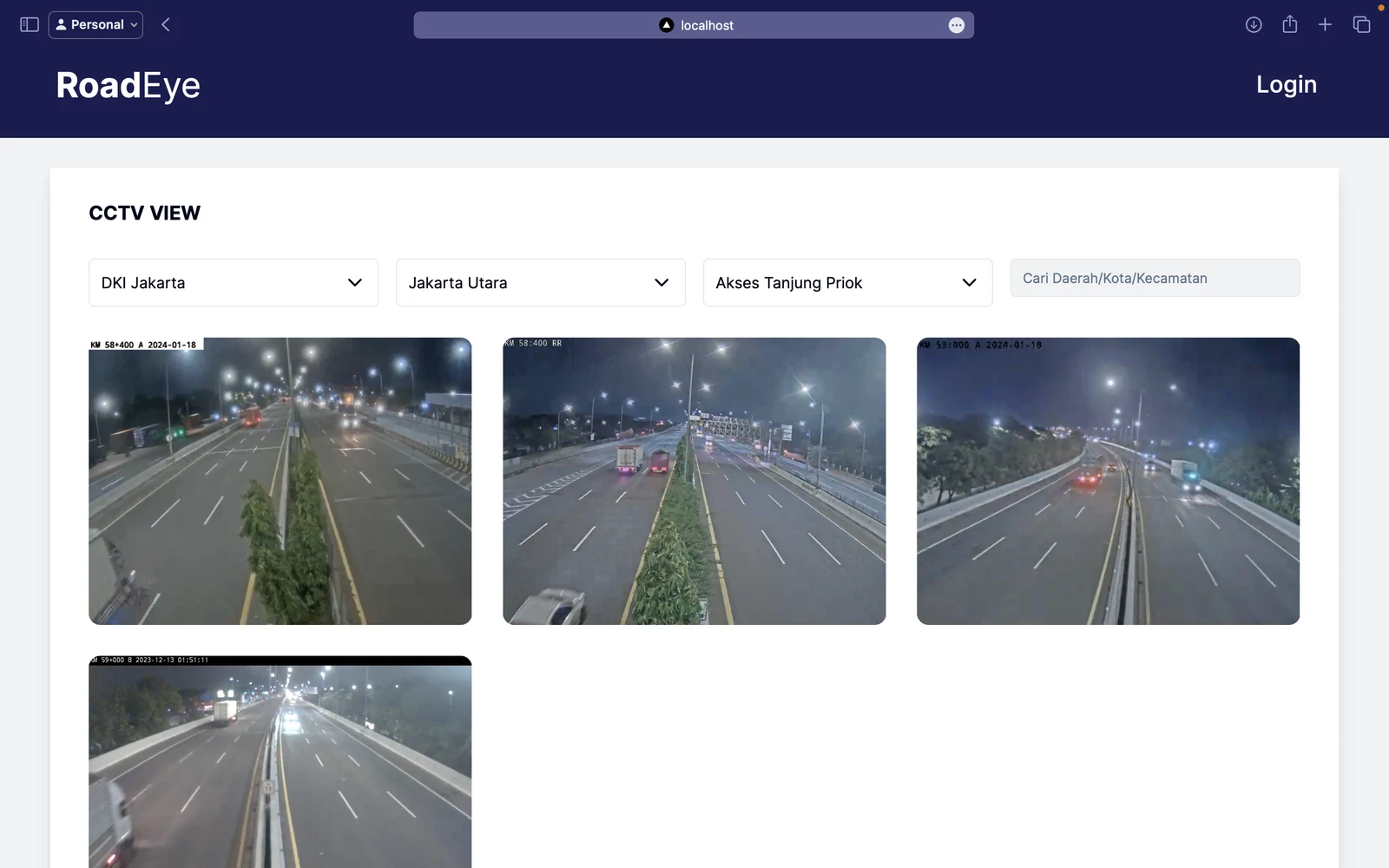
RoadEye places CCTV, maps, and accident reports in one monitoring context. Visitors can see how location and visual sources support incident review.
Map and monitoring views
The interface brings CCTV views, a map, and accident reports together for traffic review. The app uses Next.js and FastAPI. Anomaly detection and traffic-density analysis are part of the prototype design.
Incident report review
Anomaly and density detection belong to the design scope. Measuring detection capability requires labeled incidents and error analysis across varied camera conditions.
Problem and purpose
RoadEye places CCTV, maps, and accident reports in one monitoring context. Visitors can see how location and visual sources support incident review.
Technical decisions
The Next.js interface connects to a FastAPI backend. The design links visual monitoring with density and anomaly analysis, making the interface a potential operator review point.
Role & contribution
Built RoadEye with the M2VR team for GDSC Hackfest Indonesia. The app combines a Next.js interface with a Python and FastAPI backend.
Technical workflow
The interface brings CCTV views, a map, and accident reports together for traffic review. The app uses Next.js and FastAPI. Anomaly detection and traffic-density analysis are part of the prototype design.
Results & context
A Top 20 team at GDSC Hackfest Indonesia 2024 with a traffic-monitoring prototype.
Evaluation limits and lessons
Anomaly and density detection belong to the design scope. Measuring detection capability requires labeled incidents and error analysis across varied camera conditions.